

Hey there! I'm a supplier of food plastic containers, and I often get asked about what materials these containers are made of. In this blog, I'm gonna break down the common materials used in making food plastic containers, so you can have a better understanding when it comes to choosing the right ones for your food storage or packaging needs.
Polyethylene Terephthalate (PET)
One of the most widely used materials for food plastic containers is Polyethylene Terephthalate, or PET for short. PET containers are clear, lightweight, and have excellent strength and barrier properties. They're commonly used for packaging beverages like water, soda, and juice, as well as for food products such as salad dressing, ketchup, and peanut butter.
PET is a safe material for food contact because it's resistant to chemicals and doesn't leach harmful substances into the food. It's also recyclable, which makes it an environmentally friendly choice. You can find a variety of Disposable Plastic Food Containers made from PET on our website. These containers are great for takeout food, leftovers, and other short-term food storage needs.
High-Density Polyethylene (HDPE)
High-Density Polyethylene, or HDPE, is another popular material for food plastic containers. HDPE is a strong, durable plastic that's resistant to moisture, chemicals, and impact. It's commonly used for packaging milk, yogurt, and other dairy products, as well as for food storage containers and bottles.
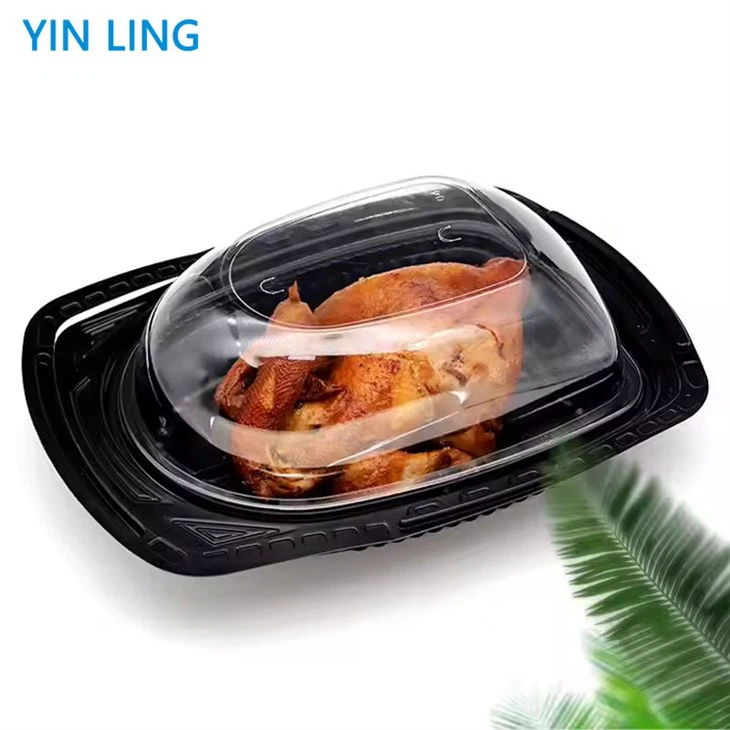
HDPE is a safe material for food contact and is also recyclable. It has a high melting point, which means it can withstand high temperatures without deforming. This makes it suitable for use in the microwave and dishwasher. We offer a range of Plastic Box For Roasted Chicken made from HDPE. These boxes are designed to keep your roasted chicken fresh and secure during transportation and storage.
Polypropylene (PP)
Polypropylene, or PP, is a versatile plastic that's known for its high heat resistance and flexibility. It's commonly used for packaging hot food, such as takeout containers, microwave-safe food containers, and yogurt cups. PP is also used for making food storage containers, lunch boxes, and other reusable food containers.
PP is a safe material for food contact and is recyclable. It has a low density, which makes it lightweight and easy to handle. It's also resistant to chemicals and doesn't absorb odors or flavors from the food. We have a selection of Transparent Vegetable Plastic Packaging Box made from PP. These boxes are perfect for displaying and storing fresh vegetables, keeping them visible and fresh for longer.
Polystyrene (PS)
Polystyrene, or PS, is a lightweight and rigid plastic that's commonly used for packaging food products such as meat, seafood, and bakery items. It's also used for making disposable food containers, foam cups, and plates. PS is a cost-effective material that provides good insulation and protection for the food.
However, PS has some environmental concerns because it's not easily recyclable and can take hundreds of years to decompose in the environment. Some people also have concerns about the potential health risks associated with PS, as it may leach harmful chemicals into the food when exposed to high temperatures. We offer a limited range of PS food containers, but we're constantly looking for more sustainable alternatives to meet the growing demand for eco-friendly packaging solutions.
Polyvinyl Chloride (PVC)
Polyvinyl Chloride, or PVC, is a strong and durable plastic that's commonly used for packaging food products such as meat, cheese, and deli items. It's also used for making cling film, food wrap, and other flexible packaging materials. PVC has excellent barrier properties, which means it can keep the food fresh and protected from oxygen, moisture, and other contaminants.
However, PVC has some environmental and health concerns because it contains chlorine and other harmful chemicals. When PVC is burned or disposed of in landfills, it can release toxic chemicals into the environment. It's also important to note that PVC should not be used for packaging fatty or oily foods, as it may leach harmful chemicals into the food. We don't offer PVC food containers due to these concerns, and we recommend choosing alternative materials that are safer and more sustainable.
Choosing the Right Material for Your Food Plastic Containers
When choosing the right material for your food plastic containers, there are several factors to consider, including the type of food you're packaging, the storage conditions, and the intended use of the container. Here are some tips to help you make the right choice:

- Food Compatibility: Make sure the material is safe for contact with the type of food you're packaging. Some plastics may leach harmful chemicals into the food, especially when exposed to high temperatures or acidic foods.
- Barrier Properties: Consider the barrier properties of the material to ensure it can keep the food fresh and protected from oxygen, moisture, and other contaminants.
- Heat Resistance: If you plan to use the container in the microwave or dishwasher, make sure the material is heat-resistant and can withstand high temperatures without deforming or releasing harmful chemicals.
- Recyclability: Choose materials that are recyclable to reduce your environmental impact. Look for containers with the recycling symbol on them and check your local recycling guidelines to see if they can be recycled in your area.
- Cost: Consider the cost of the material and the container when making your decision. Some materials may be more expensive than others, but they may also offer better quality and performance.
Conclusion
In conclusion, there are several materials used in making food plastic containers, each with its own unique properties and benefits. PET, HDPE, PP, PS, and PVC are some of the most common materials, but it's important to choose the right material based on your specific needs and requirements. As a supplier of food plastic containers, we're committed to providing high-quality, safe, and sustainable packaging solutions for our customers. If you have any questions or need help choosing the right containers for your food products, please don't hesitate to contact us. We'd be happy to assist you with your procurement and answer any questions you may have. Let's work together to find the perfect food plastic containers for your business!
References
- American Chemistry Council. (n.d.). Plastics: The Facts. Retrieved from https://www.americanchemistry.com/plastics
- Food and Drug Administration. (n.d.). Food Contact Substances Notification Inventory. Retrieved from https://www.fda.gov/food/food-contact-substances/food-contact-substances-notification-inventory
- Recycling Revolution. (n.d.). Plastic Recycling Codes. Retrieved from https://www.recyclingrevolution.org/plastic-recycling-codes


